


In a region undergoing rapid demographic change, older people are living longer than ever before. But living longer does not always mean living better.
A new report from the World Health Organisation, co-led by MENARAH Director Professor Shereen Husseinand Core Member Dr. Mohamed Ismail, reveals a troubling reality: across the Eastern Mediterranean Region, the health and social care needs of older people are not being met, and in many cases, they are not even being measured.
Titled Evidence Gaps on Unmet Health and Social Care Needs in the WHO Eastern Mediterranean Region, the report presents both a call to action and a stark reflection on where we stand. Despite the growing visibility of ageing populations in policy discussions, older people themselves remain largely invisible in planning, practice, and data.
Living Longer, But with What Support?
The traditional narrative in the region often centres on family solidarity, the idea that older people are naturally cared for within family homes. While this remains partly true, the reality is changing fast. Economic pressures, migration, conflict, and shifting social structures have eroded the capacity of families to provide care unaided.
At the same time, formal systems of support, both health and social care, are patchy, underfunded, or non-existent in many countries.
Where data is available, the situation is deeply concerning:
- In some studies, more than 80% of older people report social care needs going unmet.
- Social care, essential for maintaining independence and dignity, is often absent entirely, leaving older people without support in daily life.
- Women, widows, refugees, and those with multiple health conditions face even greater barriers to accessing care.
But these figures only scratch the surface. In most parts of the region, there is simply not enough data to even estimate the scale of need. Only three countries, Egypt, Lebanon, and the occupied Palestinian territory, were able to contribute additional evidence of ongoing work in this field.
Conflict: A Major Driver of Unmet Needs
The Eastern Mediterranean Region is home to some of the world’s most protracted conflicts, and the impact on older people is profound.
Wars and political instability disrupt health systems, damage infrastructure, displace communities, and divert resources, often away from long-term care and prevention, towards emergency response. In these conditions, older people are routinely deprioritised, with their care needs falling through the cracks of both humanitarian aid and national planning.
Older people in conflict-affected areas frequently face:
- Interrupted access to medication and health services
- Displacement without appropriate shelter or care
- Social isolation due to family separation or loss
- Invisibility in humanitarian assessments and relief strategies
The report highlights that in displacement settings, such as refugee camps, rates of unmet health care needs among older people can exceed 80%. These figures reflect not only logistical breakdowns but also deep-rooted ageism in crisis response.
Moreover, even when the fighting stops, the aftermath of conflict often leaves countries with fragmented services, overburdened systems, and minimal investment in ageing. This contributes to chronic neglect, particularly in rural and underserved areas.
In such contexts, ageing is not only a biological process; it is also a political experience, shaped by whether a person lives in peace or crisis.
Unmet Needs Are Not Inevitable, They’re the Result of Policy Gaps
What the report makes clear is that these failures are not accidental. They reflect policy choices, or a lack thereof. Across the region, health systems remain focused on acute, hospital-based care, rather than the continuous, integrated support older people often require.
Social care is still treated as an informal, family matter, not as a system in need of investment, workforce development, and infrastructure. And ageing itself is too often viewed through a narrow medical lens, rather than as a broader social and developmental issue.
When older people are excluded from national surveys, absent from policy plans, and unsupported by public services, the result is a quiet crisis.
The Case for Change
This is not just a technical challenge. It’s a question of dignity, equity, and justice. And it’s one that affects everyone — not only older people themselves, but their families, their communities, and future generations.
The WHO report urges countries to:
- Build robust national data systems that include older populations
- Expand and integrate health and social care services to meet long-term needs
- Recognise social care as a public responsibility, not just a private burden
- Prioritise equity, gender, and inclusion in all ageing-related policies
These are not impossible goals, but they do require political will, investment, and a shift in mindset.
MENARAH’s Commitment: Research, Advocacy, and Action
At the MENARAH Network, we have long advocated for a regional approach to ageing that reflects the lived realities of older people and their families. Through collaborative research, capacity-building, and policy engagement, we are working to:
- Make older people visible in data and policy
- Support systems of care that are inclusive, sustainable, and culturally grounded
- Challenge outdated assumptions about ageing and who bears the responsibility for care
- Elevate the voices of older people across the region
This new WHO report affirms what our community of scholars, practitioners, and advocates has been saying for years: older people are not a marginal issue. They are central to the future of our societies.
It’s time to listen. It’s time to act.
📘 Read the full WHO report
🔗 Learn more about the MENARAH Network
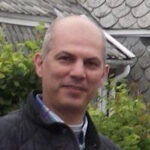
Director of Analytical Research Ltd, and Affiliate Research Fellow, Oxford Institute of Population Ageing, University of Oxford, United Kingdom
Mohamed is trained in engineering (MEng – Cairo University), computer science (MSc – Cairo University) and mathematical finance (MSc - CASS Business School, University of London). Mohamed started his career in in the City of London in 1990s, working as a quantitative analyst for leading global financial organisations, such as Merrill Lynch, HSBC, Mizuho and Credit Suisse, before he began to shift his focus onto quantitative social research. Since 2009, he has worked as an independent researcher in the field of social sciences with a particular drive to make use of different statistical and mathematical modelling techniques for the analysis of large and multi-dispersed data sets.
He has worked with universities in the UK, Europe, Australia and the Middle East; publishing a number of peer-reviewed articles. He has also been invited to give talks and presentations at several leading universities and organisations. His current research interests focus on exploring the potential role of mathematical dynamical systems in the field of population ageing across health and social care. Mohamed is the Director of Analytical Research ltd and an affiliate at the Oxford Institute of Population Ageing, University of Oxford.
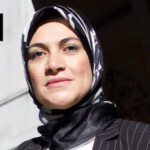
Founder and Director
Shereen Hussein is a Health and Social Care Policy professor at the London School of Hygiene and Tropical Medicine (LSHTM), United Kingdom.
Shereen Founded the MENARAH Network in 2019, through an initial grant from the Global Challenge Research Fund, UKRI. She is a medical demographer with expertise in ageing, family dynamics, migration and long-term care systems. Shereen regularly collaborates with the United Nations, the World Health Organisation and the World Bank in policy and research focused on ageing in the Middle East and North Africa Region.
Shereen received her undergraduate degree in statistics and a postgraduate degree in computer science at Cairo University. She completed an MSc in medical demography at the London School of Hygiene and a PhD in quantitative demography and population studies at the London School of Economics and Political Science, United Kingdom.


 English
  Arabic