

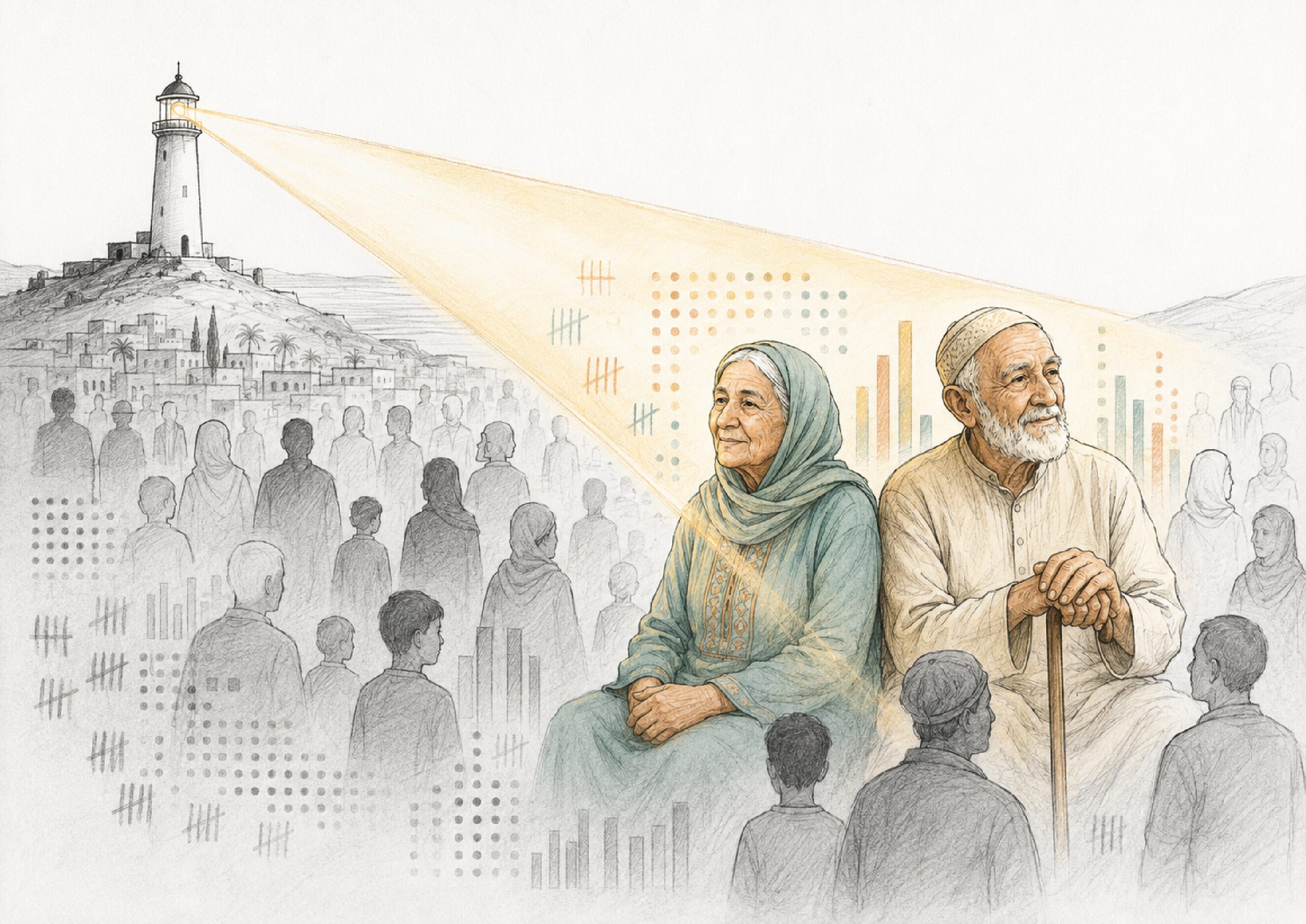
Visualise a world where all older persons live with rights, dignity, and self-determination; today and tomorrow.
As populations age globally, this is not a far aspiration. It is a shared and urgent responsibility. The development of a new UN Convention on the Rights of Older Persons offers a once-in-a-generation opportunity to turn this vision into reality.
1. What is happening at the UN?
In April 2025, UN Member States adopted a resolution to begin drafting a new international, legally binding instrument (UN Convention) on the human rights of older persons.
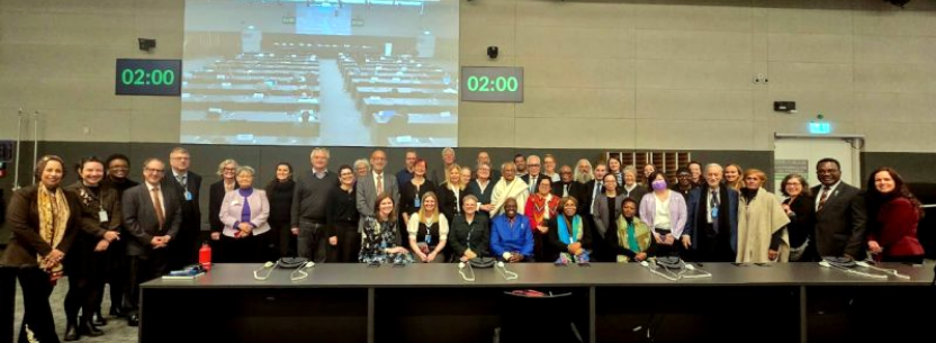
This process is underway through the Intergovernmental Working Group (IGWG) on the human rights of older persons at the Human Rights Council. In February 2026, the IGWG held its first session in Geneva, through an organisational meeting focused on the format, participation, and the work plan.
The next phase will begin shaping the substance of the Convention, including its conceptual framework and general principles.
2. Why does this Convention matter now?
Population ageing is a shared reality, including across the Middle East and North Africa (MENA), where demographic shifts are accelerating alongside social, economic, and political change.
Older persons in the MENA region face deep inequalities—linked to gender, displacement, health, and ageism—that limit access to care and inclusion. These challenges are compounded by weak systems, data gaps, and conflict, reflecting structural policy failures rather than inevitability.
This Convention is not only about the current generation of older persons. It is about ensuring that all individuals can age with rights, dignity, and self-determination now and in the future.
This is no longer about debating whether gaps exist. The global community has recognised that they do. The task now is to move into drafting with conceptual clarity.
3. Why are MENA voices significant now?
This shift, from recognising gaps to defining solutions, makes regional engagement essential.
A total of 81 UN Member States supported the April 2025 resolution establishing an intergovernmental working group to develop a UN Convention on the human rights of older persons. From the MENA region, nine of the nineteen countries supported it: Bahrain, Jordan, Kuwait, Lebanon, Morocco, Oman, Qatar, Saudi Arabia, and the United Arab Emirates.
At the February 2026 IGWG session, seven MENA States, Algeria, Bahrain, Egypt, Iran, Iraq, Kuwait, and Saudi Arabia, together with the Cooperation Council for the Arab States of the Gulf, took the floor. Statements are available in writing and via UN Web TV on the IGWG February meeting webpage. The speaker list indicates where the statements delivered can be found in the recordings.
Taken together, this indicates partial and uneven engagement across the region. While interest and participation are apparent, they are not yet consistent, either in which countries support the process or which actively participate in discussions.
The limited visibility of civil society voices from the MENA region within the formal process reinforces this broader pattern. Without stronger, more coordinated engagement (by both governments and civil society), there is a risk that regional perspectives and lived experiences will not be fully reflected as the Convention takes shape.
4. What is being shaped and why is it important?
As the process advances, it is entering the phase in which the substance of the Convention is defined.
The July IGWG session will focus on guiding the conceptual framework and general principles, the foundation that determines how rights are understood, applied, and upheld across laws, policies, and practice.
General principles set the direction of the Convention, guiding the development, interpretation, and implementation of human rights standards and the obligations undertaken by States. Decisions made now will have long-term implications for how rights are experienced in everyday life.
For example, four general principles help interpret the Convention on the Rights of the Child as a whole and guide its implementation – non-discrimination; the best interests of the child; the right to life, survival, and development; and the views of the child. Our task now is to define the principles for the UN Convention on the rights of older persons.
5. Why do MENA voices hold weight at this stage?
This is a crucial moment because these foundational elements are still being defined.
Without ongoing engagement, there is a risk that the conceptual framework and principles do not fully represent the realities and needs of older persons across the MENA region.
MENA voices are not only important—they are essential.
6. How can MENA civil society engage—now?
MENA civil society can shape the process and strengthen advocacy at national and regional levels:
- Raise awareness at the national level and work with national human rights institutions.
- Engage national and Geneva-based government representatives, and advocate for inclusive processes that involve older persons in delegations and consultations. Centring lived experience is essential—particularly the perspectives of those in marginalised or high-risk situations.
- Participate in IGWG sessions through written submissions, video statements, in-person engagement, and call for inputs. Check the IGWG website for updates on the July and October sessions.
- Strengthen regional coordination to surface shared realities, align messaging, and amplify advocacy. MENARAH is happy to coordinate a joint written submission. Please contact us here.
- Join existing initiatives to elevate your voice, such as GAROP’s Age With Rights campaign or Age Knowble’s online consultation for IGWG
The Convention will be influenced by the choices made now—and by whose voices are listened to.
This is a crucial moment. Older people’s voices from the MENA region are needed now. Your role is to shape the outcome.
Note: Country participation and support referenced in this blog are based on publicly available sources and may not be exhaustive.
Photo credit: Global Alliance for the Rights of Older People

 English
  Arabic