

A once-in-a-generation process is now underway at the United Nations. For the first time, Member States are working towards a legally binding Convention on the human rights of older persons — a dedicated treaty that would do for older people what the Convention on the Rights of the Child did for children and the Convention on the Rights of Persons with Disabilities did for disabled people.
In April 2026, the MENARAH Network submitted written evidence to the UN Office of the High Commissioner for Human Rights (OHCHR) as part of the formal Call for Inputs ahead of the first session of the Intergovernmental Working Group (IGWG), to be held in Geneva from 13 to 17 July 2026.
This submission was led by Professor Shereen Hussein, Founder and Director of MENARAH, in consultation with over 500 Network members and subscribers across the Middle East and North Africa region.
Why this Convention matters, and why the MENA region cannot afford to wait
Older persons are the only major group in the world without a dedicated, legally binding international human rights instrument. The result is a gap that is felt acutely across the MENA region: populations are ageing faster than the systems built to support them, most countries lack dedicated legislation protecting older people from abuse and neglect, and older people living with chronic illness in conflict-affected and displacement settings face life-threatening interruptions to care with no legal framework to fall back on.
Nine of nineteen MENA countries supported the Human Rights Council Resolution that launched this process. But civil society voices from the region remain underrepresented in the formal negotiations. Our submission is one effort to change that.
What MENARAH said
The submission responds to four questions posed by the OHCHR on the framework, principles, normative gaps, and architecture of the future Convention. Across all four, it makes the same central argument: older people are full and equal rights-holders, not beneficiaries of care or welfare at the discretion of states. The Convention must mark a fundamental shift away from paternalistic models and towards a framework that creates enforceable obligations.
On normative gaps, the submission identifies ten areas where existing international human rights law is silent, fragmented or insufficient and where the new Convention must step in. Deliberately, we list these in an order that places older people’s rights as citizens first ‚their freedom from abuse, their legal capacity, their right to social connection, their digital rights, their entitlement to a healthy environment ‚before turning to the care-related rights that are sometimes mistakenly assumed to be the primary concern of older people. Ageing is not synonymous with needing care. The Convention must say so clearly.
Some of the gaps we highlight are rarely discussed in international legal forums. The right to social connection is one. Drawing on the 2025 Report of the WHO Commission on Social Connection, we set out that the Eastern Mediterranean Region has the highest rate of social isolation among older adults of any WHO region globally, and that loneliness is associated with dramatically increased risks of heart disease, stroke, dementia and premature death. This is a public health emergency and a human rights issue, and the Convention must treat it as both.
On the MENA context specifically, the submission calls for strong protections for older people in humanitarian crises and armed conflict, a gap of particular urgency given the scale of displacement and conflict across the region. It draws on field evidence from civil society organisations working with older cancer patients and dementia caregivers in Egypt, Lebanon, Gaza and beyond. Their testimonies are woven into the submission because the Convention must be grounded in lived experience, not only legal abstraction.
A collective voice
This submission reflects the breadth of the MENARAH community. In the weeks before submission, we circulated a draft to our 500-plus members and subscribers and received comments, corrections, endorsements and new evidence from researchers, patient advocates, practitioners and civil society organisations across the region.
Contributions came from a patient advocate and founder of Aid and Hope for Cancer Patients Care, who shared her experience of living with chronic illness after conflict-forced displacement. From Mostmtoon Initiative in Egypt, which provided evidence from their work supporting older adults with dementia and their caregivers. From a civil society voice working with women with cancer in Gaza, who reminded us that dignity is not only a philosophical concept — it is what is at stake on a daily basis for older people living in the midst of conflict.
We are grateful to every person who contributed. Their voices are in the document.
What happens next
The IGWG will hold its first substantive session in Geneva from 13 to 17 July 2026, followed by a second session from 26 to 30 October 2026. Drafting of the Convention text will proceed over the coming years. This is a long process, and sustained engagement from civil society, especially from the MENA region, will be essential at every stage.
MENARAH will continue to engage. We plan to submit oral and written evidence at future sessions, to coordinate regional civil society participation, and to share updates and analysis with our network as negotiations develop.
If you would like to contribute to future submissions, join a consultation, or simply stay informed, please contact us or follow us on Twitter/X and LinkedIn at @MENARAH3.
Read and cite the submission
The full submission is available upon request.
Full citation:
Hussein, S. and the MENARAH Network (2026). Written Submission to the OHCHR Call for Inputs: General Framework, Architecture and Guiding Principles of a Legally Binding Instrument on the Human Rights of Older Persons. Submitted to the UN Intergovernmental Working Group on the Human Rights of Older Persons, 21 April 2026. London: MENARAH Network / London School of Hygiene and Tropical Medicine.
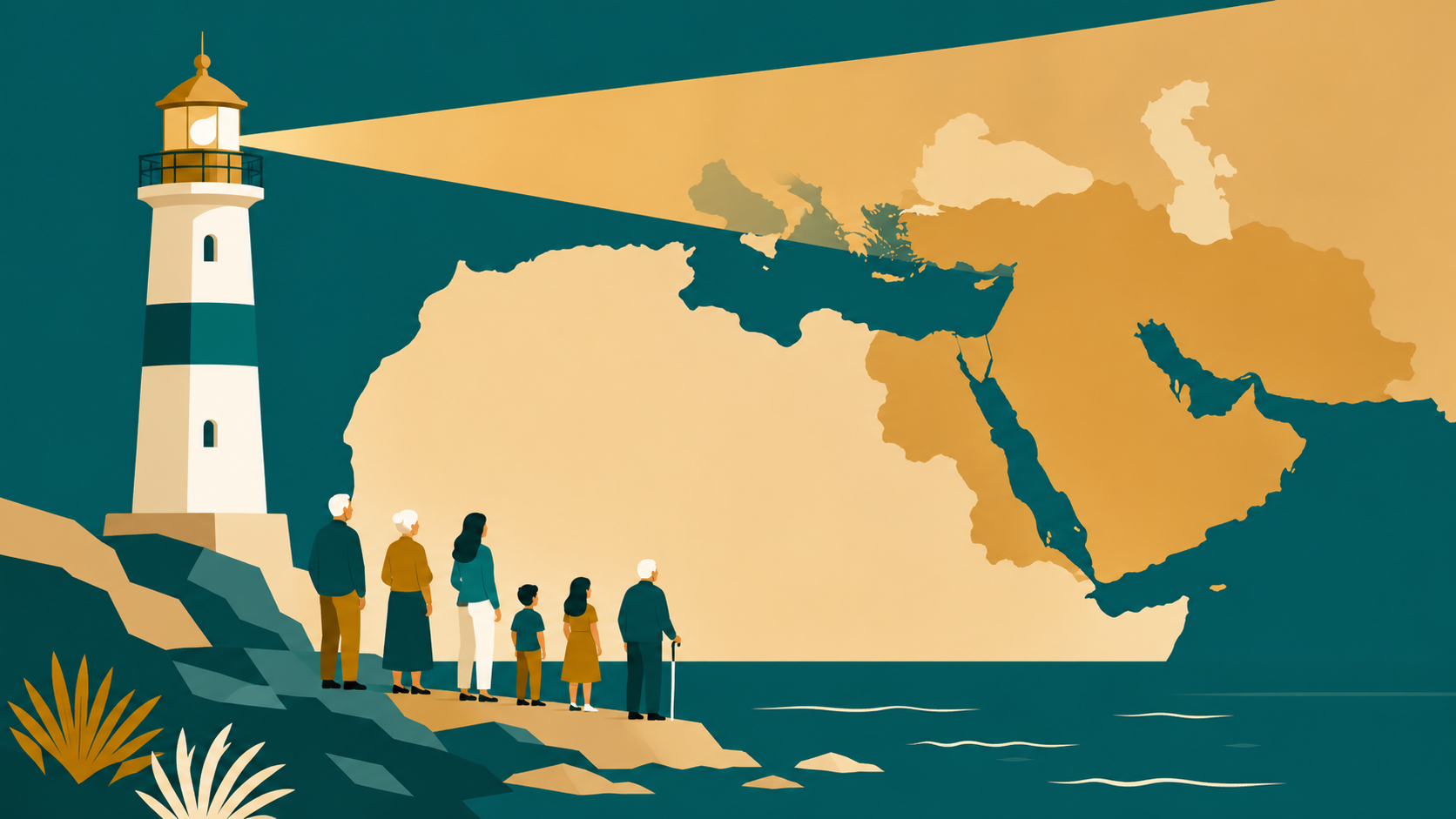
Blog header illustration generated using ChatGPT by OpenAI. Generated April 2026. The prompt was developed by the MENARAH Network.
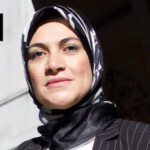
Founder and Director
Shereen Husseinis a Health and Social Care Policy professor at the London School of Hygiene and Tropical Medicine (LSHTM), United Kingdom.
Shereen Founded the MENARAH Network in 2019, through an initial grant from the Global Challenge Research Fund, UKRI. She is a medical demographer with expertise in ageing, family dynamics, migration and long-term care systems. Shereen regularly collaborates with the United Nations, the World Health Organisation and the World Bank in policy and research focused on ageing in the Middle East and North Africa Region.
Shereen received her undergraduate degree in statistics and a postgraduate degree in computer science at Cairo University. She completed an MSc in medical demography at the London School of Hygiene and a PhD in quantitative demography and population studies at the London School of Economics and Political Science, United Kingdom.

 English
  Arabic