


Presented at the UN Women & UN ESCWA event, “Ageing and Older Women in the Arab Region,” 25 September 2025
As populations in the Arab region grow older, a silent crisis is emerging, one that is often invisible, unreported, and deeply gendered. Elder abuse, in its many forms, is increasingly recognised as a major human rights and public health issue — and older women are the most at risk.
At a recent UN Women and UN ESCWA regional discussion on “Ageing and Older Women in the Arab Region,” Prof. Shereen Hussein highlighted the urgent need to address the abuse, neglect, and exploitation experienced by older women, and to frame ageing not merely as a welfare issue, but as one of gender justice and human dignity.
What Elder Abuse Looks Like, and Why It Happens
Across the Arab region, psychological abuse and neglect are the most common forms of mistreatment faced by older people. But when viewed through a gender lens, clear patterns emerge:
- Widows, women without income or property, and those isolated from family decision-making are especially vulnerable.
- Economic crises and displacement amplify risks, leaving many older women dependent on family members who may themselves be under severe financial pressure.
Legal and Policy Gaps
Despite regional progress on ageing and gender equality, most Arab countries still lack dedicated laws protecting older people from abuse.
- Out of 21 Arab constitutions, only Jordan explicitly mentions protection against elder abuse.
- Seven countries have stand-alone older persons’ laws, but few address women’s specific vulnerabilities such as inheritance rights, property ownership, or widowhood.
- Existing reporting mechanisms, often linked to violence-against-women hotlines, are ill-suited to the realities of older survivors — many of whom rely on their abusers for daily care.
Promising Initiatives
Across the region, several emerging initiatives show what progress can look like:
- Egypt (2024): New legislation establishing a national hotline, legal aid services, and prohibiting institutionalisation without consent.
- Morocco: Kolona Ma’ak — a digital platform for reporting abuse against women, now expanding to include older survivors.
- Saudi Arabia: Community programmes addressing caregiver stress and social neglect.
- Lebanon: NGO-led shelters and legal aid for older women survivors of domestic and financial abuse.
These examples, Prof. Hussein noted, demonstrate that prevention is possible, but only if older people, especially women, are recognised as rights-holders rather than passive dependents.
A Call to Centre Older Women in Policy and Practice
Prof. Hussein urged governments, UN agencies, and civil society to act decisively:
- Adopt comprehensive elder abuse legislation, modelled on gender-based violence frameworks.
- Guarantee inheritance and property rights for older women.
- Strengthen accessible and anonymous reporting channels, separate from existing child or GBV helplines.
- Support family caregivers through stipends, training, and respite services.
- Partner with NGOs and religious leaders to challenge stigma and promote respect and inclusion.
“Elder abuse is preventable,” Prof. Hussein stressed.
“With the right mix of laws, caregiver support, and community awareness, societies can move from silence to action and protect dignity in ageing.”
From Silence to Action
The webinar, moderated by Ms. Aparna Mehrotra (UN Women) and featuring contributions from UN ESCWA’s Dr. Sara Salman and Ms. Manal Said, underscored that ageing and gender equality are inseparable.
As Ms. Nyaradzayi Gumbonzvanda, UN Women’s Assistant Secretary-General, noted in her opening remarks, protecting older women’s rights is not just a demographic necessity, it is a matter of justice and inclusion.
Prof. Hussein’s message was clear: ending elder abuse begins with recognising older women’s agency, voices, and value, not as dependents, but as essential members of their families and communities.
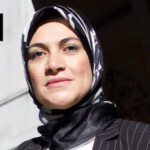
Founder and Director
Shereen Husseinis a Health and Social Care Policy professor at the London School of Hygiene and Tropical Medicine (LSHTM), United Kingdom.
Shereen Founded the MENARAH Network in 2019, through an initial grant from the Global Challenge Research Fund, UKRI. She is a medical demographer with expertise in ageing, family dynamics, migration and long-term care systems. Shereen regularly collaborates with the United Nations, the World Health Organisation and the World Bank in policy and research focused on ageing in the Middle East and North Africa Region.
Shereen received her undergraduate degree in statistics and a postgraduate degree in computer science at Cairo University. She completed an MSc in medical demography at the London School of Hygiene and a PhD in quantitative demography and population studies at the London School of Economics and Political Science, United Kingdom.

 English
  Arabic