


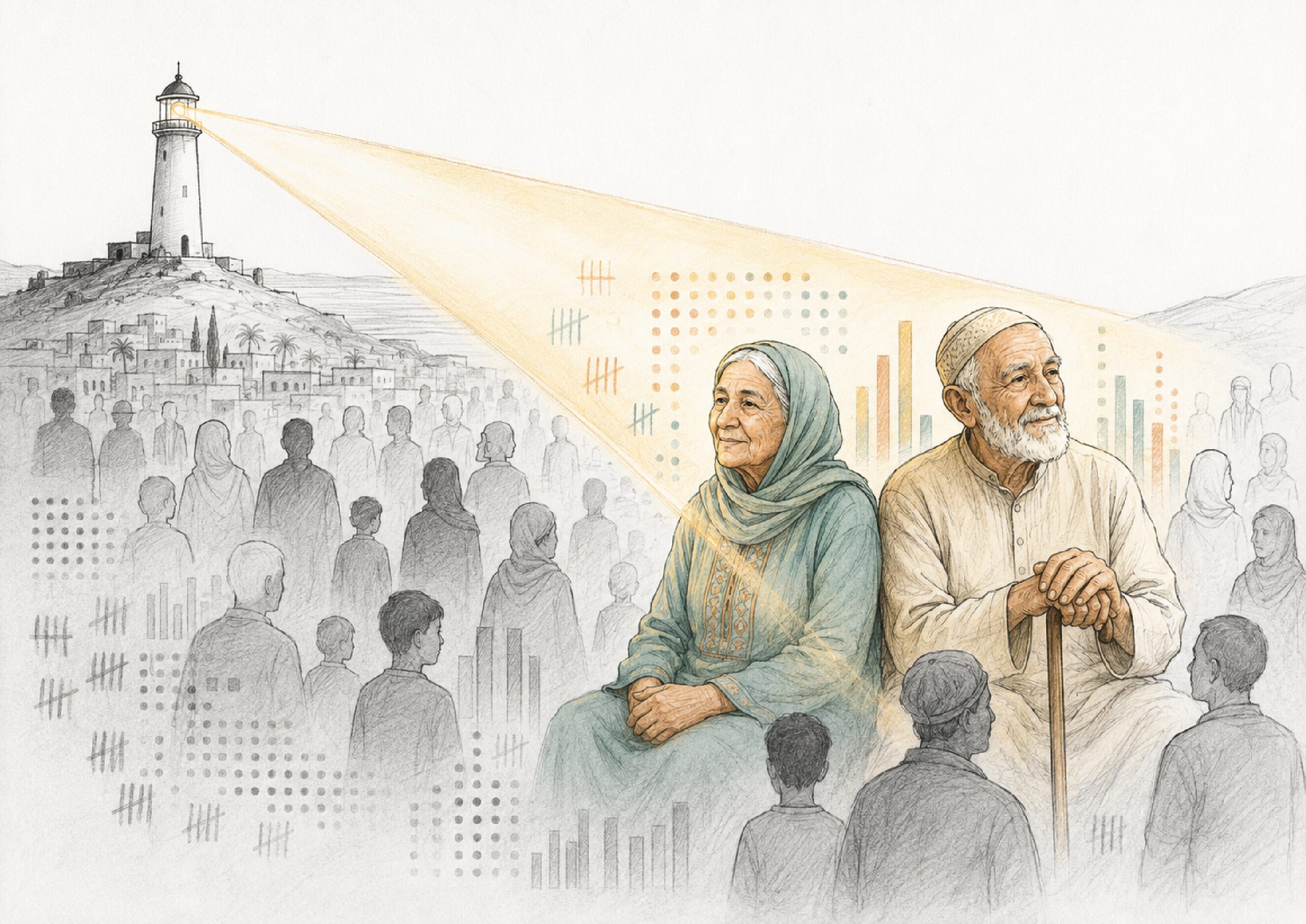
Across the Eastern Mediterranean Region (EMR), strong social ties and multigenerational bonds are often seen as cornerstones of cultural identity. From vibrant street cafés to family gatherings that span generations, the region is widely believed to be socially rich and connected. But behind this powerful narrative lies a different reality, one that data is increasingly bringing to light.
The recently published WHO Commission on Social Connection report delivers a striking message: the EMR, despite its cultural reputation, faces some of the highest levels of loneliness and social isolation in the world.
A Hidden Epidemic of Loneliness
The numbers are sobering. 21% of people in the EMR report experiencing loneliness, second only to the African region. Among older adults, this reality is even more stark. A study from Lebanon revealed that 46.1% of older people are socially isolated, a figure that places the region at the highest end of the global spectrum. And yet, the assumption that “we are already connected” continues to obscure these truths.
This disconnect between perception and reality matters. Because loneliness and social isolation are not merely emotional states; they are public health risks. The health consequences are wide-reaching, increasing the risk of premature death to a level comparable with smoking 15 cigarettes a day.
Why Social Connection Matters for Older People
Older people are especially vulnerable. Social isolation is linked to higher risks of depression, anxiety, cardiovascular disease, type 2 diabetes, cognitive decline, and dementia. Evidence shows that loneliness increases the risk of developing dementia by 72%, and social isolation raises the risk of major neurocognitive disorders by over 20%.
These aren’t abstract risks, they are daily realities for many older adults living alone, displaced by conflict, or marginalised by digital exclusion.
But the problem isn’t limited to older populations. The region’s young people, especially those navigating unemployment, migration, or rapidly shifting cultural norms, are also experiencing unprecedented social disconnection. The breakdown of intergenerational ties exacerbates this disconnection, weakening the community structures that have traditionally served as support systems.
The Unseen Burden: Informal Carers at Risk
A critical but often overlooked group facing high levels of social disconnection is informal carers—family members, friends, or neighbors who provide unpaid care to loved ones. The WHO report shows that informal caregivers, particularly those supporting individuals with mental health or neurological conditions, report loneliness and social isolation at rates ranging from 21% to 52.7% in countries like Australia, China, and the United States. In comparison, the rate in the general population is significantly lower—around 7%.
During the COVID-19 pandemic, loneliness among carers increased dramatically. In some countries, measures of loneliness among carers jumped to as high as 34%, reflecting the emotional and physical strain of caregiving under isolation. In the EMR, where health and social systems often rely heavily on family care, these hidden caregivers are at risk of being left behind—sacrificing their own well-being for the sake of others.
Caregiver isolation affects not only the individual but also the quality and sustainability of the care they provide. Supporting carers through social connection initiatives, respite programs, and community recognition is essential for both public health and long-term care strategies.
Why the Myth Persists
The EMR’s cultural emphasis on family, hospitality, and collectivism may ironically be part of the problem. It creates a blind spot. The myth of being “naturally connected” discourages open conversations about loneliness, reinforces stigma, and leads to the underdevelopment of policies, programs, and research. MENARAH Network’s previous research shows how negative perceptions of ageing are manifested in the region and how it impacts the quality of life of individuals.
But silence is costly. Not only to individuals, but to communities and health systems.
The Path Forward: Policy, Research, and Innovation
The WHO report outlines a clear way forward, and for the EMR, the message is clear: we must treat social connection as a public health priority. Here’s how:
1. Invest in Data and Local Research
Current data is sparse and concentrated in a few countries. We need broader, more inclusive studies to understand the true scale and shape of social disconnection across diverse communities in the region. This includes rural areas, refugee populations, and those with disabilities.
2. Prioritise Intergenerational Programs
We must leverage one of the region’s traditional strengths, intergenerational solidarity, before it is further eroded. Community storytelling, digital literacy programs for older people led by youth, and intergenerational mentorship schemes can rebuild bonds and reduce stigma.
3. Design Cities and Services That Foster Connection
Public spaces, transportation systems, and housing must be built with connection in mind. Parks, community centres, libraries, and safe gathering spaces are not luxuries; they are essential social infrastructure for well-being.
4. Launch Public Awareness Campaigns
We need to talk about loneliness. Campaigns that normalise discussion and promote empathy can dismantle stigma. Countries like the UK and Japan have pioneered national loneliness strategies; we must craft our own, tailored to the region’s cultural context.
5. Harness Technology Thoughtfully
Digital tools can connect, but they can also isolate. Any strategy involving technology must prioritise accessibility, digital literacy, and human-centred design, especially for older adults and marginalised groups.
Global Insights, Regional Leadership
This is not just a global issue with regional consequences—it’s also a regional issue with global implications. We are proud that Professor Shereen Hussein, Director of the MENARAH Network, serves as a member of the WHO Technical Advisory Group on Social Connection. Her involvement ensures that the unique experiences and needs of the Eastern Mediterranean are reflected on the world stage.
Her message is clear: “Social connection must be embedded in how we design health systems, urban spaces, and social policies—especially for older people.”
A Call to Reconnect
It is time to challenge the myth. The EMR may be culturally rich in traditions of connection, but the data tells us those traditions are fraying. If we want to build healthy, inclusive, and resilient societies, we must make social connection a collective priority—across health, education, housing, and technology.
At MENARAH, we believe that no one should age or care alone in silence. Now is the time to listen, to act, and to reconnect.
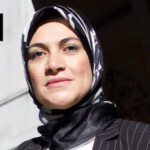
Founder and Director
Shereen Husseinis a Health and Social Care Policy professor at the London School of Hygiene and Tropical Medicine (LSHTM), United Kingdom.
Shereen Founded the MENARAH Network in 2019, through an initial grant from the Global Challenge Research Fund, UKRI. She is a medical demographer with expertise in ageing, family dynamics, migration and long-term care systems. Shereen regularly collaborates with the United Nations, the World Health Organisation and the World Bank in policy and research focused on ageing in the Middle East and North Africa Region.
Shereen received her undergraduate degree in statistics and a postgraduate degree in computer science at Cairo University. She completed an MSc in medical demography at the London School of Hygiene and a PhD in quantitative demography and population studies at the London School of Economics and Political Science, United Kingdom.
 English
  Arabic